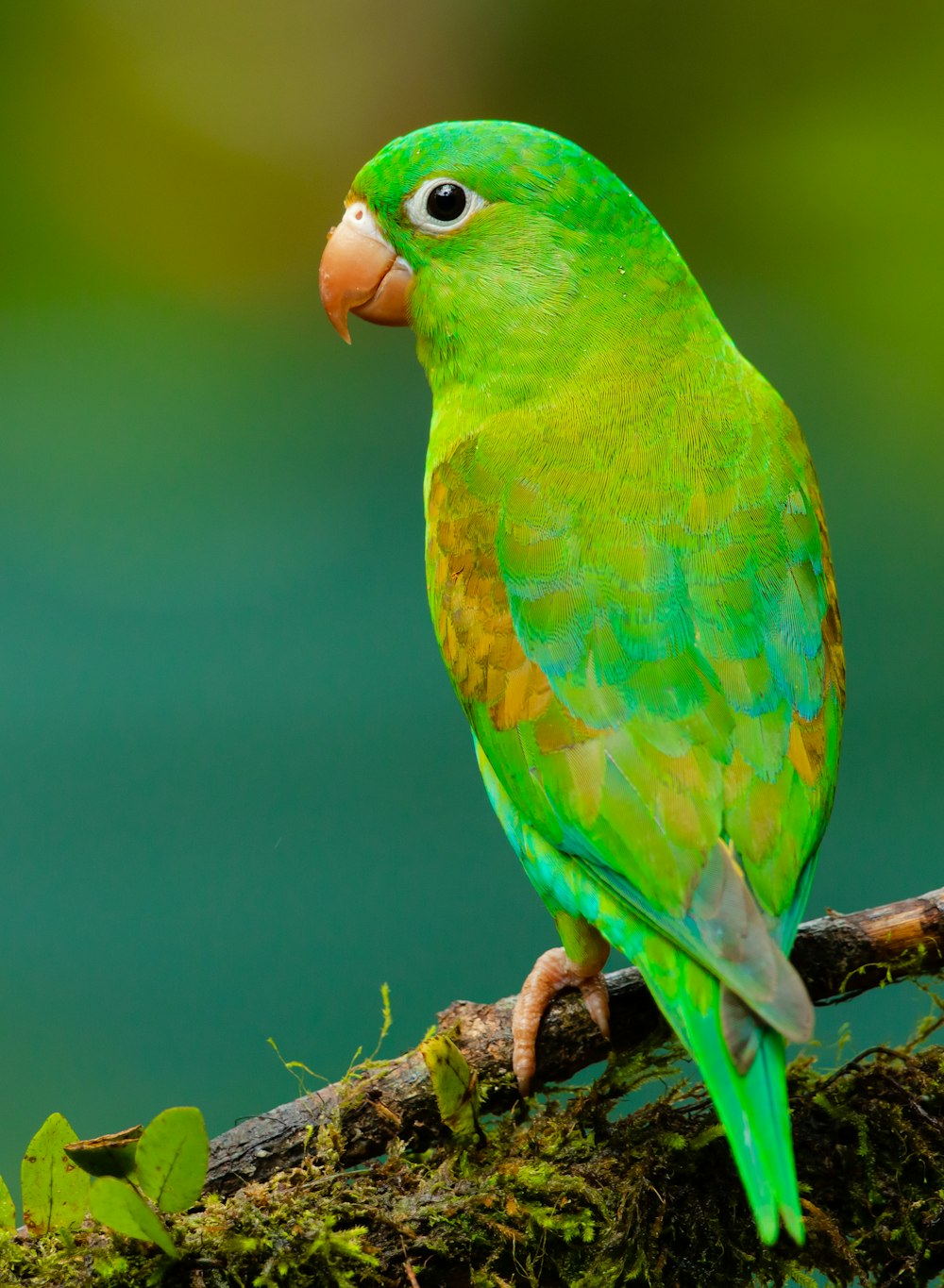
I'll never forget the first time Mango bit me. One second he was happily perched on my finger, the next those beak clamps sank into my knuckle like he was testing a walnut for freshness. I yelped, he flew off, and I sat there bleeding and bewildered. What did I do wrong?
Turns out, I just didn't speak bird.
I've owned parrots for over a decade now. Three of them, across four different species, and I've made just about every mistake in the book. The thing is — birds are brutally honest. They tell you exactly how they feel, every single time. You just have to learn the language. And honestly? I learned most of it through bites and squawks and one particularly memorable incident involving a half-eaten banana and my laptop keyboard.
What the Hell Is That Thing They Do With Their Eyes?
Look, if you remember nothing else from this, remember this: watch the eyes. When a parrot's pupils rapidly dilate and contract — it's called "pinning" or "flashing" — something big is happening in that tiny dinosaur brain. Excitement can cause pinning. So can fear. So can "I am about to remove your finger." The context tells you which one it is.
Here's what I check for, every single day, with my birds:
- Eye pinning — Pupils going wild. If they're also leaning forward with feathers slicked flat against their body? That bird is amped up, and not in a good way. Back off slowly. If they're chattering happily and their feathers are puffed loose? They're just excited to see you. Big difference.
- Wing quivering — That little flutter, almost like a shiver. I see it with my conure, Pip, when he's standing on his play stand trying to decide if he wants to fly to me or not. It's excitement mixed with indecision. (I usually just hold out my hand and wait.)
- Tail bobbing — A gentle up-and-down with each breath can just mean your bird flew across the room and needs a second. But if they're sitting still and the tail is pumping — like, visibly pumping — that's a vet visit. Respiratory infections in birds are scary fast. A friend of mine lost a cockatiel because she thought the tail bob was "cute." It wasn't.
- Fluffed feathers — Puffing up can mean "I'm cozy." But a bird that stays fluffed all day with droopy posture and half-closed eyes? Something's wrong. I've made that call three times over the years, and every time I was right to worry.
- One foot up — This is the relaxed pose. If your bird is standing on one leg with the other tucked up into their belly fluff, they feel completely safe. You're doing something right.
- Beak grinding — That soft, scratchy grinding sound right before they fall asleep. It's the bird equivalent of a cat purring. First time I heard it I thought something was wrong with Mango's teeth. (Birds don't have teeth. I was very new at this.)
So About the Noise
Birds are loud. It's one of the first things new owners realize, usually around 5:47 AM on a Saturday when you wanted to sleep in. But not all noise is the same, and once you learn to tell them apart, your blood pressure will thank me.
Contact calls are those repetitive, piercing squawks your bird lets out the second you leave the room. In the wild, flock members call to keep track of each other. Your bird isn't trying to annoy you — they're literally saying "Hey, where'd you go? You alive?" The fix is almost stupidly simple: call back. I just yell "I'm in the kitchen, you little monster!" and Mango settles right down. Works every time.
Alarm calls are different. Sharp, urgent, completely distinct from the usual chatter. My cockatiel, Nori, has a specific screech she uses when she sees a hawk through the window. I thank her, close the curtain, and she stops immediately. She did her job. She's very proud of herself. (And honestly? I sleep better knowing she's on watch.)
Contentment sounds are the ones that make it all worth it. Soft chattering. Bad whistling. Tongue-clicking. My Senegal parrot, Gizmo, talks to his toys when he's having a good day. Full conversations. I eavesdrop constantly.
Then there's the flock call. This is the big one — a loud, sustained scream that carries. Wild parrots do it at dawn and dusk to check in with the flock. Your pet parrot still has that instinct buried in their DNA. If your bird screams at sunrise and sunset every single day, congrats — you own a parrot. It's normal. Don't fight it. Invest in good noise-canceling headphones and plan around it.
Three Problems That Made Me Want to Pull My Hair Out
The Screaming That Wouldn't Stop
If your bird screams nonstop, all day, every day, something is wrong. Parrots in good environments are loud sometimes — they're parrots — but not constantly. The root cause is almost always boredom, loneliness, or not enough to do.
And here's the trap I see everybody fall into: the bird screams, you rush over and go "Shhh, it's okay, baby." Congratulations. You just trained your bird that screaming summons you. You now have a screamer for life. I did this with Mango for three months before I realized I was the problem. The real fix? Ask yourself: does my bird have enough toys? Enough out-of-cage time? Something to actually do? I spent $14 on a foraging wheel on Amazon and it bought me more peace than anything else I've ever tried.
Feather Plucking — The One That Broke My Heart
This one is rough. A bird that plucks its own feathers — pulling them out one by one, sometimes to the point of bald spots and raw skin — is a bird in serious distress. It can be medical (skin infections, allergies, internal pain), but more often it's psychological. Boredom, loneliness, hormones, or a sudden change in routine can trigger it.
I knew a cockatiel named Kiwi who started plucking his chest bald after his owner switched from working nights to days. Nobody explained it to him. He just knew his person left at the wrong time and came home at the wrong time, and his little bird brain couldn't handle it. It took months of extra attention, new toys, a consistent bedtime — and a $90 vet visit to rule out mites — before his feathers started growing back.
Once plucking becomes a habit, it's incredibly hard to stop. Like, really hard. Some birds never stop even after the original stress is gone. So prevention is everything. Keep their environment stable. Keep them busy. And watch for the first signs of over-preening before it turns into full plucking.
Biting, and Why It's Almost Always Your Fault
Here's the truth: birds do not bite for no reason. They bite because you missed the warning signs.
A bite is a last resort. Before it happens, your bird will give you chances. Eye pinning. Leaning away. Feathers pressed flat. Tail fanning. If you ignore all of those, the beak comes next. Do not punish a bird for biting. They're communicating the only way they have left. If you yell at them or flick their beak, you've just taught them that hands are dangerous and unpredictable. Congratulations, now they'll bite faster and harder next time.
Instead, figure out what you did. Were you asking them to step up when they clearly didn't want to? Did you reach into the cage too fast? Are they hormonal and guarding their space? I apologized to Mango out loud after he bit me — I said "I'm sorry, I wasn't paying attention" — and I swear the tension in his body relaxed. Maybe I was projecting. Maybe not. I don't care.
How I Train (and I Mean Actually Train, Not Just Wing It)
I use positive reinforcement. Full stop. No grabbing, no scruffing, no "dominance" nonsense. Birds are not dogs. You cannot alpha-roll a parrot. (I've seen people try. It goes badly.)
My method: I carry a little plastic cup of safflower seeds — my birds would sell me out to the hawk outside for a single safflower. When Pip does something I want, like stepping up calmly or letting me touch his toes without biting, he gets a seed and an overly dramatic "Good boy!" I don't force anything. I just make the right choice the most rewarding choice.
Does it take patience? God, yes. Gizmo took six months — six months — to voluntarily step onto my hand. There were days I wondered if he'd ever trust me. But now he does it every single time, with zero stress. That relationship is built on trust, not fear. And it took longer than I wanted, but it was worth every frustrating session.
Positive reinforcement works for everything. Want your bird to stop screaming? Reward quiet moments. (I sat next to Mango's cage for an hour reading a book, dropping a seed in his bowl every time he was quiet for 30 seconds.) Want them to eat a vegetable? Put a tiny piece of bell pepper in their bowl and lose your mind celebrating when they touch it. Break it down into baby steps and be obnoxiously consistent.
The Cage Setup I Wish I'd Gotten Right From Day One
A bird's cage should feel like a playground, not a cell. I aim for at least 4 to 6 toys at any time, and I rotate them weekly so nothing gets stale. Foraging toys — the kind that hide treats inside — are worth their weight in gold. I bought a $12 foraging box from Planet Pleasures and watching Mango work a puzzle for fifteen minutes to get a single sunflower seed is genuinely one of the most satisfying things I see all day.
Out-of-cage time is non-negotiable. I give my birds at least 2 to 3 hours outside the cage every single day. Sometimes more on weekends. A parrot that lives in a cage 23 hours a day will develop problems. It's not a question of if. It's when.
Don't Ignore the Screaming, and Don't Punish the Bite
I've mentioned both of these already, but they're the two biggest mistakes I see new owners make, so I'll hammer them again.
Ignoring screaming doesn't fix it. If your bird is screaming because they're bored or lonely, ignoring them just teaches them you're not coming. So they scream louder. And longer. And by the time you finally crack and go check on them, you've reinforced the loudest, longest scream. Address the cause, not the symptom.
And punishing a bite will wreck your relationship. If you yell, flick, or blow on your bird's face after a bite, you've taught them that hands = bad. Next time they'll bite faster and harder, preemptively, because they expect punishment. The better move: don't react. (Harder than it sounds, I know.) Set the bird down, walk away, take a breath, and think about what signal you missed.
Stuff Nobody Warned Me About
- Birds are messy. Like, impressively, almost artistically messy. They throw food, they bathe in their water bowl and then fling water everywhere, and they produce a truly astonishing amount of feather dust. I vacuum every single day. Accept this early or lose your mind.
- They're also stubborn as hell. A parrot who doesn't want to go back in the cage will not go back in the cage. Not until they decide it's time. You cannot rush a bird. I learned this the hard way when I tried to hurry Mango back in because I was late for work. It took 45 minutes. I was very late for work.
- Hormone season is real. Spring hits and your sweet little cuddlebug turns into a territorial gremlin. It passes. Don't take it personally. (But maybe don't stick your finger in the cage during April.)
- Talk to your bird constantly. Narrate everything. They're learning your language even if you don't realize it. Pip says "Good morning" on weekdays but not weekends because he figured out I sleep in on Saturdays. That's not a trained trick — he just noticed the pattern and started doing it. Birds are scary smart.
I don't have a neat way to wrap this up. The more time I spend with birds, the less I feel like I know. They're not trying to give us a hard time. They're having one, and they're telling us about it the only way they can. Every scream, every bite, every feather fluff is a message. I'm still learning to read them, and I've been at this for over ten years.
Anyway. Go give your bird a sunflower seed. You'll both feel better.